Cache: The Secret to Lightning-Fast Apps
Have you ever noticed how some apps load faster than others, and you don’t have to wait for ages every time you perform the same action? The secret behind this speed often lies in something called a cache. Whether it’s a lending app, a streaming service, or an e-commerce platform, caches play a vital role in delivering smooth and speedy experiences to users.
Let’s break down the concept of caching and how it helps software companies — particularly those working on mobile apps and websites — provide faster, more reliable services.
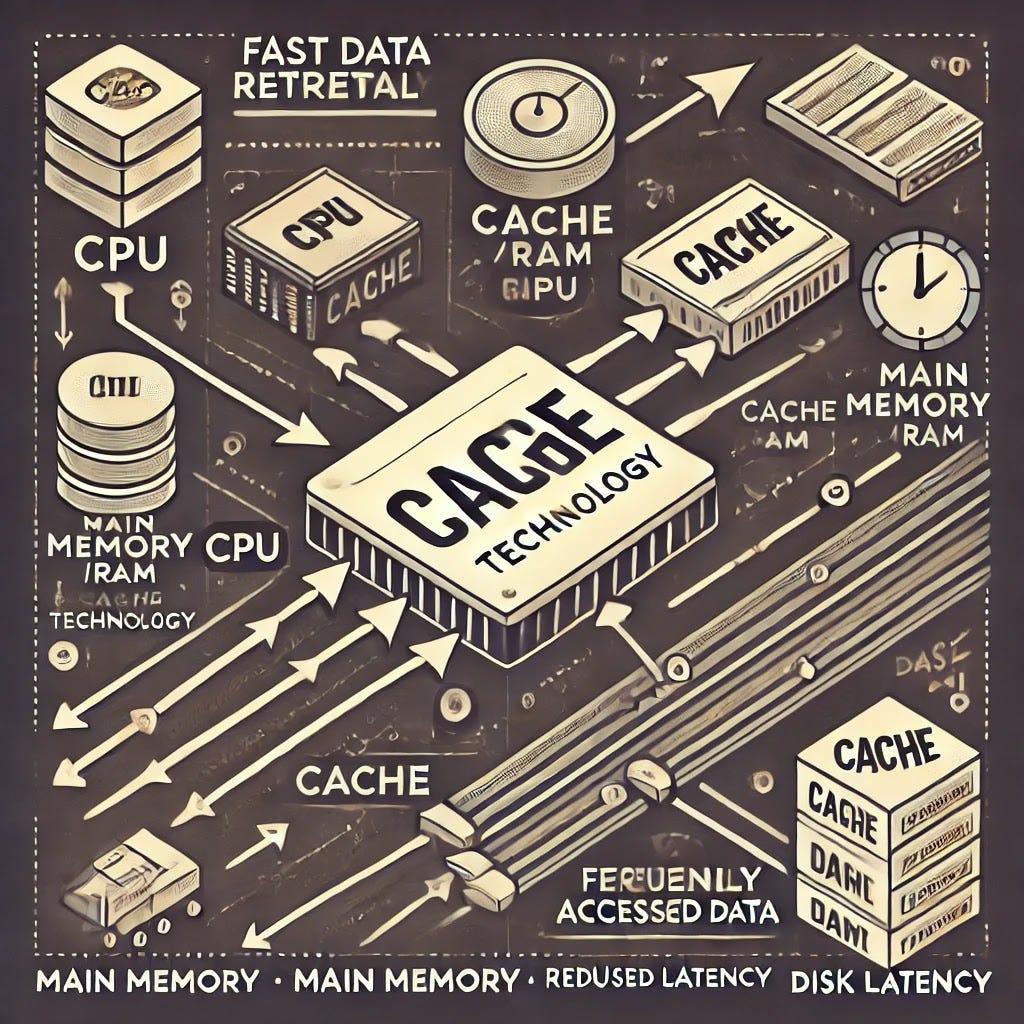
What is Cache?
In simple terms, a cache is a temporary storage area where frequently accessed data is stored. Think of it like a handy shortcut on your phone. Instead of retrieving the same data repeatedly from slower storage, apps store it in a cache, allowing them to access the data much faster the next time around.
Imagine you’re using a lending app. Every time you check your loan balance, the app doesn’t have to request the same data from the server repeatedly. Instead, it stores your balance in a cache, so the next time you check, it pulls the information from there — resulting in a faster response.
Why Use Cache in Mobile Apps and Websites?
In apps and websites that serve millions of users, speed and reliability are crucial. Here’s how caching benefits different types of applications:
- Lending Apps: Apps that handle financial data (like loan balances or payment histories) use caching to store frequently accessed data. For example, if you check your balance regularly, caching reduces the time it takes for the app to retrieve and display this data.
- Streaming Services: Platforms like Netflix or Hulu use caching to deliver videos without annoying buffering. They store small parts of videos in a cache, making playback faster and smoother.
- Logistics and E-commerce: Companies like Amazon or logistics apps store user preferences, past searches, or product details in the cache. This allows users to browse products without delay, as the app doesn’t have to retrieve all the data from the server every time.
By minimizing the need to re-fetch data from servers, caching improves user experience and reduces load on the backend systems.
Types of Cache Systems
Now, cache is not one-size-fits-all. Depending on the needs of the application, different types of caching solutions can be used. Here are some commonly used ones:
1. Memcached
Memcached is one of the oldest and most widely-used caching systems, especially for web applications. Let’s break down its key features:
- In-Memory Storage: Memcached stores data in RAM, which means data retrieval is extremely fast compared to pulling data from disk-based databases.
- Distributed Hash Table: It uses a large hash table to store key-value pairs across multiple machines. This helps in horizontal scaling, as adding more servers can increase the storage capacity.
- Least Recently Used (LRU) Eviction: When the cache is full, Memcached removes the least recently used data, ensuring that the most frequently accessed data remains available.
- Use Cases: Memcached is typically used to cache database query results, session data, and API responses. In lending apps, for example, when you frequently check your loan status, Memcached might be caching this information so that you don’t hit the database every time.
- Drawbacks: Since Memcached stores everything in memory, data is non-persistent, meaning it’s lost when the server goes down. This makes it unsuitable for applications that need data durability.
2. Redis
Redis is more than just a caching solution; it’s a highly versatile in-memory key-value store that can function as a database, message broker, and even a queue.
- Advanced Data Structures: Unlike Memcached, Redis supports more complex data types, including strings, lists, sets, hashes, and sorted sets. This makes Redis perfect for applications that need advanced querying capabilities.
- Persistence Options: One of Redis’s biggest advantages is that it provides optional data persistence. You can configure it to save snapshots of data to disk at regular intervals, or use an append-only file (AOF) to log every write operation.
- Replication and High Availability: Redis supports master-slave replication, where you can have multiple copies of the same data across different nodes, ensuring high availability. This is useful in apps that need to maintain uptime, even when some nodes fail.
- Use Cases: Redis is commonly used in applications that require real-time data access, such as leaderboards in games, chat applications, and session management in e-commerce apps. In a lending app, Redis might store user authentication tokens or frequently queried customer data for quick access.
- Drawbacks: Redis can be more complex to set up and manage than Memcached. While it offers persistence, its primary strength lies in its in-memory speed, which means it still relies heavily on memory, making it potentially costly for larger datasets.
3. Aerospike
Aerospike takes caching to the next level by optimizing for high-performance NoSQL databases. It’s built for applications that need to handle massive traffic without experiencing any downtime, making it a go-to for companies that need both caching and storage.
- Hybrid Model: Aerospike combines in-memory storage with SSD-based storage, which means it can handle very large datasets without running out of memory. It’s perfect for companies needing petabyte-scale data storage with low-latency access.
- Optimized for NVMe SSDs: One key feature of Aerospike is that it’s designed to take advantage of NVMe SSDs, which offer ultra-fast read/write speeds. This allows Aerospike to serve both as a high-speed cache and as a durable data store.
- Use Cases: Aerospike is frequently used in ad-tech, telecoms, and financial services. In a logistics app, for instance, Aerospike can store large amounts of tracking data for real-time access, even under heavy loads.
- Drawbacks: While Aerospike is great for high-performance applications, it can be overkill for smaller use cases or apps that don’t require real-time data retrieval at such large scales.
4. Distributed Cache
In distributed caching, the cache is spread across multiple servers, allowing apps to scale horizontally and handle large traffic loads. This kind of caching is necessary when a single cache server cannot store or process all the data required by the application.
- How It Works: In distributed caching, data is broken into shards, and each shard is stored on a different server. This allows the cache to grow in both size and transactional capacity as more servers are added.
- Sharding Strategies:
- Modulus Sharding: Assigns keys to servers based on a modulus operation.
- Range-Based Sharding: Divides data into ranges and assigns each range to a different server.
- Consistent Hashing: Evenly distributes cache keys across shards, ensuring that even if a server goes down, the system continues to operate efficiently.
- Use Cases: Distributed caching is widely used in e-commerce platforms like Amazon or Flipkart, where a massive amount of product data, user sessions, and search results need to be cached across different regions. It ensures that users from different parts of the world get fast responses.
- Drawbacks: The complexity of managing a distributed cache can increase, as you need to maintain consistency, prevent cache misses, and ensure data is up-to-date across all nodes.
Is Cache Always a Good Solution?
While caching offers numerous benefits, it’s not always the perfect solution. Its effectiveness depends on several factors, such as:
- Data Volatility: If your app deals with highly dynamic data that changes frequently (like stock prices), caching might not be as useful. The cache may serve outdated data unless it’s updated frequently.
- Complexity: Setting up and maintaining a cache comes with its challenges. You have to decide when to refresh the cache, how much data to store, and handle cache misses (when data isn’t found in the cache).
- Cost vs Benefit: A cache needs memory, and the larger the cache, the more memory you need. If the memory costs outweigh the performance gains, it might not be worth it for smaller-scale apps.
How to Choose the Right Cache?
The decision to use a particular type of cache is subjective. It depends on the nature of your application, the amount of data, and how quickly the data changes. Here are some factors to consider:
- Read vs Write: If your app is mostly read-heavy (like streaming apps), caching is a great option. However, if there are frequent writes (like payment updates in a lending app), you’ll need a caching system that can handle both efficiently.
- Size of Data: Apps with large datasets, like logistics or e-commerce, need a distributed caching system to scale with growing user demand. But smaller apps can often make do with simpler solutions like Memcached.
- Persistence Needs: If you need the data to stick around after a restart (think session data or user preferences), Redis is a better option because it supports persistence along with caching.
Conclusion
Caching is a powerful tool in the hands of software companies that work on mobile apps and websites. Whether you’re building a fast and reliable lending app, streaming platform, or e-commerce service, implementing the right cache strategy can make all the difference.
However, it’s not always the ultimate solution. Knowing when to use cache, what type to implement, and how to manage it effectively will ensure that your application performs well under load and keeps users happy.
By making smart caching decisions, companies can significantly enhance their application’s performance while maintaining stability — even when handling millions of users simultaneously.
Comments
Post a Comment